

The Future of Home Energy: Why Sustainability Matters in 2026
xuyangquan
As we navigate through 2026, the landscape of home energy has undergone a remarkable transformation. The convergence of technological innovation, environmental consciousness, and economic viability has made sustainable home energy solutions more accessible than ever before. For homeowners, real estate investors, and families alike, understanding this shift isn't merely about adopting new technology—it's about securing a more resilient, cost-effective, and environmentally responsible future for our homes and communities.
The urgency behind this transformation cannot be overstated. Global energy prices continue to fluctuate, climate change impacts become increasingly visible, and government incentives for clean energy adoption reach unprecedented levels. According to recent industry data, over 40% of new residential construction projects in developed nations now incorporate some form of renewable energy system, a dramatic increase from just 15% a decade ago. This paradigm shift signals a fundamental change in how we conceptualize and interact with home energy consumption.
This comprehensive guide explores the critical importance of sustainability in home energy for 2026, examining the technologies driving this change, the economic benefits awaiting homeowners, and practical strategies for transitioning to a more sustainable energy future. Whether you're contemplating your first solar installation or seeking to optimize an existing system, this article provides the insights and guidance necessary to make informed decisions about your home's energy future.
Understanding the Current State of Home Energy Consumption
The Traditional Energy Paradigm and Its Limitations
For generations, the conventional approach to home energy followed a remarkably consistent pattern: draw power from the grid, consume energy as needed, and pay monthly bills based on consumption. This model, while seemingly convenient, harbors significant inefficiencies and vulnerabilities that have become increasingly apparent in recent years.
Traditional grid-dependent homes face several fundamental challenges that sustainable alternatives directly address. First, there's the issue of price volatility—fossil fuel markets remain susceptible to geopolitical tensions, supply chain disruptions, and environmental regulations, causing energy prices to swing dramatically from season to season. Second, traditional homes have zero control over their energy sources, meaning that every kilowatt-hour consumed potentially contributes to carbon emissions and environmental degradation. Third, aging grid infrastructure in many regions leads to reliability concerns, with power outages becoming more frequent due to extreme weather events and infrastructure strain.
The typical American household spends approximately $2,000 annually on energy bills, with heating, cooling, and electricity representing the largest expenses. For families seeking to reduce these costs while minimizing their environmental footprint, the traditional model offers few viable pathways toward improvement. This reality has catalyzed interest in sustainable alternatives that offer greater control, predictability, and responsibility.
The Rise of Distributed Energy Resources
The energy landscape of 2026 is characterized by a dramatic shift toward distributed energy resources (DERs)—small-scale electricity generation and storage technologies located close to where electricity is used. This decentralization represents one of the most significant transformations in the energy sector since the establishment of centralized power plants over a century ago.
Distributed energy resources encompass a diverse array of technologies, including rooftop solar panels, small-scale wind turbines, residential battery storage systems, smart appliances, and electric vehicle charging infrastructure. The proliferation of these technologies has fundamentally altered the relationship between homeowners and the electrical grid, transforming passive consumers into active participants in the energy ecosystem.
This transition toward distributed energy reflects broader trends in technology democratization and sustainability consciousness. Just as digital technologies empowered individuals with information access and communication capabilities previously reserved for large institutions, renewable energy technologies now enable homeowners to generate, store, and manage their own electricity. The implications extend far beyond individual households, reshaping utility business models, regulatory frameworks, and community energy arrangements.
Key Sustainable Energy Technologies for 2026
Solar Photovoltaic Systems: More Efficient and Affordable Than Ever
Solar energy technology has achieved remarkable advancements that position it as the cornerstone of residential sustainability efforts. The year 2026 sees solar photovoltaic (PV) systems offering efficiency ratings that were unimaginable just a decade ago, with premium panels converting over 25% of incident sunlight into electricity.
The cost trajectory of solar technology deserves particular attention. When adjusted for inflation and efficiency improvements, the installed cost of residential solar systems has declined by more than 70% since 2010. A typical 6-kilowatt residential solar installation, sufficient to cover the electricity needs of an average American household, now costs approximately $12,000 to $15,000 before incentives—a fraction of the cost required for comparable systems in previous decades.
Modern solar installations extend beyond simple rooftop panels to encompass innovative solutions such as solar shingles that integrate seamlessly with roofing materials, bifacial panels that capture reflected light, and building-integrated photovoltaics that serve dual functions as structural elements and energy generators. These advancements have addressed aesthetic concerns that previously deterred some homeowners, making solar an attractive option for properties where traditional panels might appear incongruous.
Battery storage systems have emerged as essential complements to solar installations. The integration of lithium-iron-phosphate (LFP) and other advanced battery technologies enables homeowners to store excess solar generation for use during evening hours or grid outages. Contemporary residential batteries offer capacities ranging from 10 to 30 kilowatt-hours, with efficiency ratings exceeding 90% and lifespans extending beyond 15 years. This combination of solar generation and battery storage increasingly enables homes to achieve energy self-sufficiency, decoupling from grid dependency while maintaining reliable power access.
Wind Energy for Residential Applications
While residential wind energy has historically received less attention than solar, technological advancements have expanded its viability for appropriate locations. Small-scale wind turbines, ranging from 1 to 10 kilowatts in rated capacity, can contribute meaningfully to household energy needs in areas with consistent wind resources.
The effectiveness of residential wind systems depends critically on wind availability, with optimal sites experiencing average wind speeds exceeding 12 miles per hour at turbine height. For qualifying properties, wind energy can supply 20% to 50% of annual electricity consumption, with the highest contributions occurring during winter months when solar generation typically decreases.
Modern residential wind turbines incorporate sophisticated blade designs, gearless generator systems, and advanced power electronics that maximize energy capture while minimizing noise and maintenance requirements. Installation considerations include tower height, setback requirements, and local regulations, but properly sited systems can provide decades of reliable, emission-free energy generation.
Hybrid systems combining solar and wind generation offer particular advantages for achieving consistent energy production throughout the year. The complementary generation patterns of these technologies—solar production peaking during summer afternoons, wind often strongest during winter nights—help smooth overall energy supply and reduce battery discharge requirements.
Geothermal Heat Pump Systems
Geothermal heating and cooling systems represent one of the most efficient approaches to residential climate control. These systems leverage the relatively constant temperature of the earth beneath the surface—approximately 45 to 60 degrees Fahrenheit in most temperate regions—to provide heating, cooling, and hot water generation with remarkable efficiency.
The efficiency advantage of geothermal systems is substantial. While conventional air-source heat pumps typically achieve efficiency ratings of 200% to 350% (meaning they produce two to three-and-a-half units of heat energy for each unit of electrical energy consumed), geothermal systems commonly achieve ratings exceeding 400% to 600%. This translates directly to reduced energy consumption and lower utility bills.
Installation costs for geothermal systems remain higher than conventional alternatives, with complete ground-loop installations typically ranging from $20,000 to $35,000 for an average-sized home. However, federal and state incentives, combined with lifetime energy savings often exceeding $50,000, make geothermal an increasingly attractive investment. The systems also offer exceptional durability, with ground loops often warrantied for 50 years and interior components lasting 25 years or more with proper maintenance.
Smart Home Energy Management
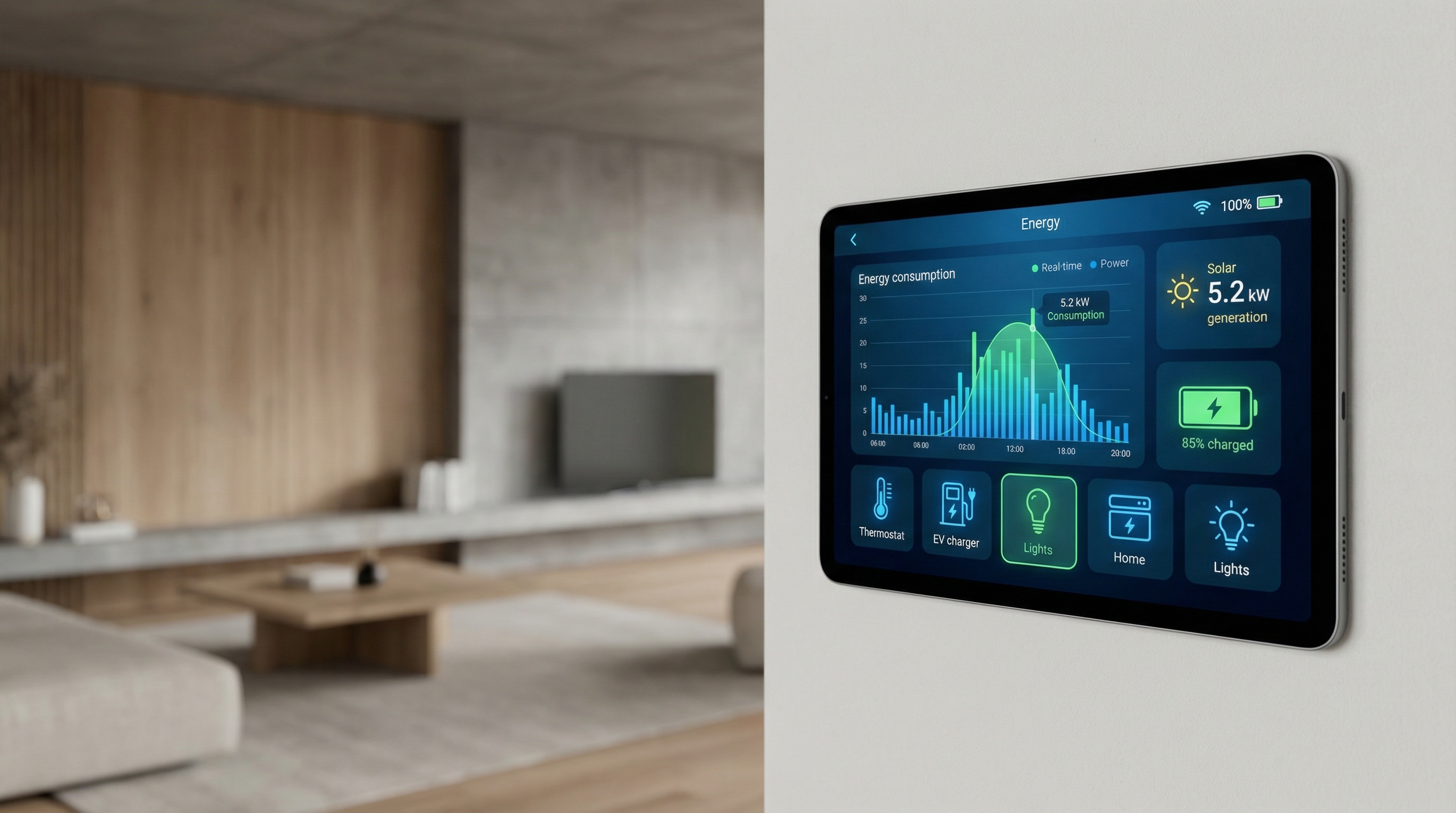
The intelligent management of home energy consumption has become as important as generation itself. Smart home energy management systems (EMS) provide homeowners with unprecedented visibility and control over their energy usage, enabling optimization that was previously impossible.
Contemporary energy management platforms integrate with smart thermostats, lighting systems, appliances, electric vehicle chargers, and other devices to orchestrate energy consumption based on multiple factors. These factors include utility rate schedules, weather forecasts, solar generation predictions, battery storage levels, and user preferences. The result is a dynamic optimization that minimizes costs while maintaining comfort and convenience.
Demand response programs, facilitated by smart energy management systems, offer additional opportunities for cost reduction. These programs compensate homeowners for temporarily reducing electricity consumption during periods of high grid demand. For households with battery storage, participating in demand response can generate annual payments ranging from $100 to $500 while supporting grid stability.
Artificial intelligence and machine learning algorithms have become central to advanced energy management systems. These technologies enable predictive optimization that anticipates household energy needs and automatically adjusts system settings to maximize efficiency. Over time, AI systems learn household patterns and preferences, continuously refining their optimization strategies to deliver ever-improving performance.
The Economic Case for Sustainable Home Energy
Return on Investment Considerations
The financial attractiveness of sustainable home energy investments has never been stronger. Multiple factors converge to create compelling return on investment scenarios for homeowners willing to invest in renewable energy and efficiency improvements.
Solar panel installations typically achieve paybacks ranging from 6 to 10 years, depending on system size, local electricity rates, available incentives, and installation quality. Following the payback period, solar-generated electricity is essentially free, with only minimal maintenance costs for the system's remaining 20- to 30-year lifespan. This translates to lifetime savings potentially exceeding $40,000 to $60,000 for a typical household.
Battery storage systems, while not offering direct financial returns through energy generation, provide substantial value through multiple mechanisms. These include avoided costs from time-of-use rate optimization, demand charge reduction for commercial properties, backup power value during outages, and participation in virtual power plant programs. When these value streams are fully accounted for, battery installations increasingly demonstrate positive economics.
Energy efficiency improvements—including insulation upgrades, window replacements, and high-efficiency HVAC systems—offer some of the most attractive returns in home energy investment. Many efficiency measures achieve paybacks of 3 to 7 years, with certain improvements qualifying for incentives that further accelerate returns. Beyond direct financial returns, efficiency improvements enhance comfort, indoor air quality, and home value.
Available Incentives and Rebates
The incentive landscape for sustainable home energy has reached unprecedented levels in 2026, with federal, state, local, and utility programs providing substantial financial support for qualifying projects.
The federal residential clean energy credit, established under the Inflation Reduction Act, continues to provide a 30% tax credit for qualified solar, wind, geothermal, and battery storage installations through 2032. This credit applies to both equipment and installation costs and can be claimed over multiple years for larger projects. Beginning in 2026, standalone battery storage installations qualify for the credit even when not paired with solar systems, representing a significant expansion of eligible projects.
State and local incentives vary substantially by location but frequently include additional tax credits, rebates, and grant programs. Many states offer net metering programs that compensate homeowners for excess electricity exported to the grid, while others provide property tax exemptions for renewable energy installations. Utility programs frequently offer rebates for energy-efficient appliances, smart thermostats, and EV chargers.
Utility rebate programs have become increasingly sophisticated, with some utilities offering $500 or more for smart thermostat installations, $1,000 to $3,000 for heat pump water heaters, and substantial incentives for comprehensive efficiency upgrades. These programs often require pre-approval and professional installation but can substantially reduce project costs for participating homeowners.
Impact on Property Value
Sustainable energy features increasingly influence residential property values, with studies consistently demonstrating positive correlations between energy efficiency and home sale prices. According to research published by Lawrence Berkeley National Laboratory, homes with solar installations sell for approximately 4.1% more than comparable non-solar homes, with the premium varying by region and market conditions.
Battery storage systems and advanced energy management features contribute additional value by enhancing energy resilience and flexibility. As extreme weather events become more frequent and grid reliability concerns persist, homes capable of operating independently during outages command premium values in many markets.
Energy efficiency certifications, including ENERGY STAR, LEED for Homes, and Passive House standards, provide marketable documentation of a home's performance characteristics. These certifications can facilitate faster sales and support higher asking prices, particularly among environmentally conscious buyers and those seeking to minimize future energy costs.
Environmental Benefits and Climate Impact
Carbon Emission Reductions
The environmental rationale for sustainable home energy extends far beyond individual household economics. Residential energy consumption accounts for approximately 20% of global carbon emissions, making household energy choices significant contributors to climate change mitigation efforts.
A typical residential solar installation prevents 3 to 5 tons of carbon emissions annually, equivalent to the emissions from driving 7,000 to 12,000 miles. When combined with energy efficiency improvements and battery storage enabling increased renewable self-consumption, the carbon reduction potential increases substantially. A home achieving 80% renewable energy self-sufficiency can prevent 6 to 10 tons of emissions annually.
The lifecycle perspective on renewable energy emissions reveals that even accounting for manufacturing, transportation, and installation, solar and wind systems generate the energy required for their production within 1 to 3 years. Over their operational lifespans of 25 to 30 years, renewable energy systems effectively eliminate emissions that would otherwise occur, making them among the most effective carbon reduction strategies available to households.
Supporting Grid Decarbonization
Individual sustainable energy choices contribute to broader grid decarbonization beyond direct household consumption. When homeowners install solar systems and reduce grid consumption, they decrease demand on fossil fuel-fired power plants. When homeowners add battery storage and shift consumption away from peak demand periods, they reduce the need for backup generation capacity that often relies on fossil fuels.
The aggregation of household-level choices creates meaningful grid-level impacts. Regions with high residential solar penetration have experienced reduced wholesale electricity prices during midday hours when solar generation peaks. This phenomenon, sometimes called the "duck curve," reflects the transformation of energy supply and demand patterns as distributed generation increases.
Smart charging of electric vehicles and intelligent load management through home energy management systems further enhance grid benefits. These technologies enable vehicles and flexible loads to consume electricity when renewable generation is abundant and grid carbon intensity is low, maximizing the environmental benefits of household energy choices.
Practical Steps for Transitioning to Sustainable Home Energy
Conducting an Energy Assessment
The journey toward sustainable home energy should begin with a comprehensive assessment of current consumption patterns and efficiency opportunities. Professional energy audits identify the most impactful improvement opportunities and establish baselines against which future improvements can be measured.
A thorough energy assessment typically includes blower door testing to quantify air leakage, infrared imaging to identify insulation deficiencies, and evaluation of heating, cooling, and water heating systems. The assessment results enable prioritization of improvements based on cost-effectiveness and impact, ensuring that available resources are allocated to achieve maximum benefit.
DIY assessments using smartphone apps and plug-in electricity monitors provide valuable insights without the cost of professional services. These tools can identify energy hogs, reveal consumption patterns, and help homeowners understand the potential impact of various improvements. While less comprehensive than professional audits, DIY assessments represent an excellent starting point for budget-conscious households.
Prioritizing Improvements
The sequencing of sustainable energy improvements significantly affects overall project economics and outcomes. Experienced professionals generally recommend addressing efficiency improvements before adding renewable generation, as reduced consumption lowers the size and cost of required generation systems.
Insulation and air sealing typically represent the highest-priority efficiency improvements, as these measures reduce heating and cooling loads that constitute the largest portion of household energy consumption. Attic insulation, wall insulation, and air sealing around penetrations and joists provide immediate and long-lasting benefits. Quality insulation improvements can reduce heating and cooling costs by 15% to 30%, creating savings that continue throughout the life of the home.
Heating and cooling system upgrades offer the next highest-priority opportunities, particularly for homes with aging or inefficient equipment. Heat pump technology has advanced dramatically, with cold-climate models capable of providing efficient heating even in northern climates. The dual functionality of heat pumps—providing both heating and cooling from a single system—simplifies maintenance and often reduces overall equipment costs.
Solar installation typically follows efficiency improvements, with system sizing based on remaining electricity consumption. By reducing consumption first, homeowners frequently find that smaller, less expensive solar systems meet their needs while providing equivalent or greater savings.
Selecting Contractors and Technologies
The quality of installation significantly affects the performance, longevity, and safety of sustainable energy systems. Selecting qualified contractors requires careful evaluation of credentials, experience, references, and warranty coverage.
For solar installations, the North American Board of Certified Energy Practitioners (NABCEP) offers certification programs for installers that provide objective verification of technical competency. NABCEP-certified installers, while sometimes charging slightly higher prices, provide greater confidence in installation quality and system performance. Homeowners should verify contractor licenses, insurance coverage, and manufacturer certifications before signing contracts.
Equipment selection should balance initial cost, expected performance, warranty coverage, and manufacturer reputation. Major manufacturers typically offer 25-year warranties for solar panels, with degradation rates of 0.5% or less annually. Battery warranties vary more substantially, with coverage ranging from 10 to 15 years depending on manufacturer and product line.
Multiple quotes should be obtained for significant projects, enabling comparison of pricing, equipment specifications, warranty coverage, and installation approaches. Quotes should be reviewed carefully to ensure comparison of equivalent systems and services, as lowest-priced options sometimes include compromises in equipment quality or installation standards.
Future Trends and Emerging Technologies
Advanced Battery Technologies
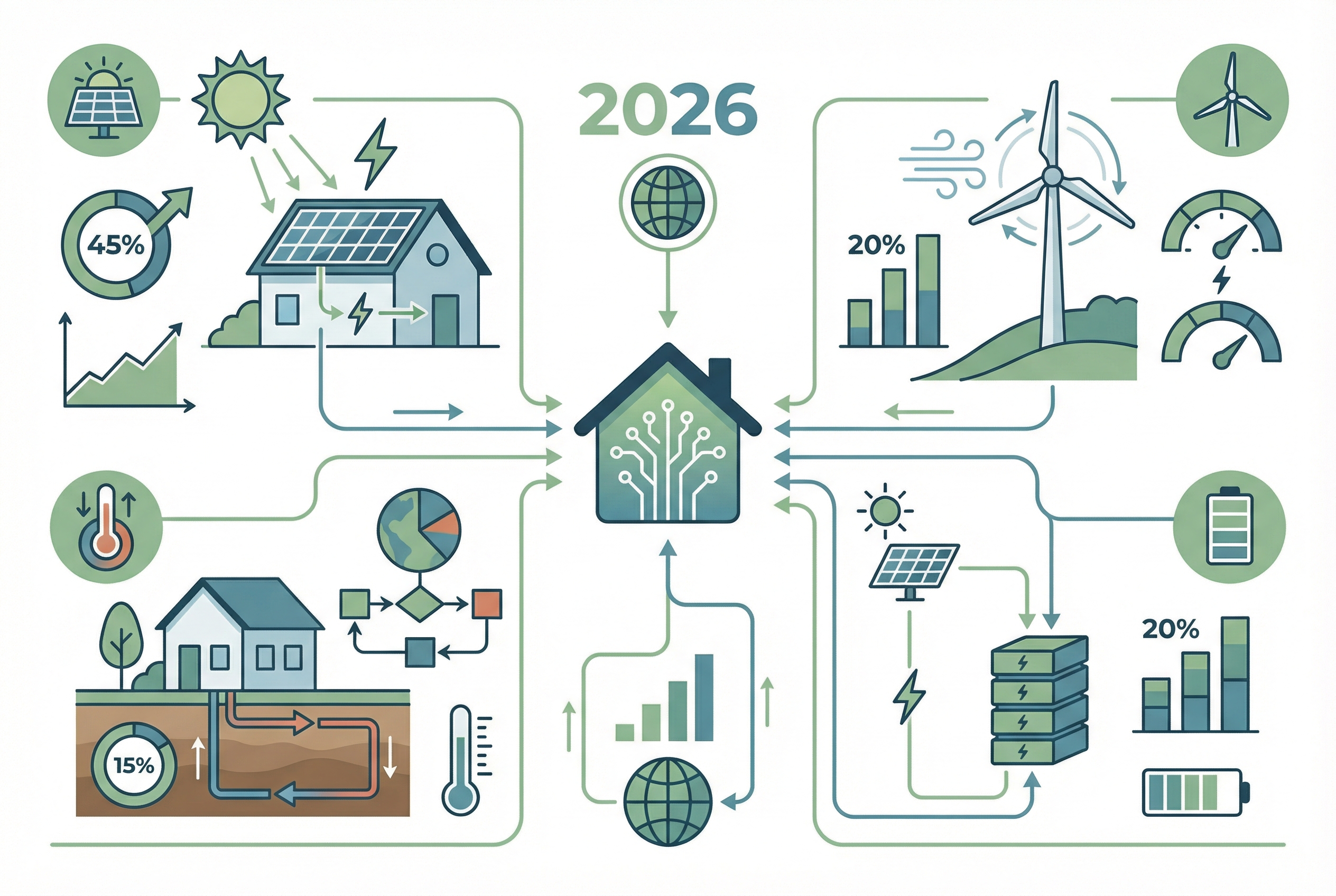
Battery storage technology continues advancing rapidly, with next-generation chemistries and designs promising improved performance, longer lifespans, and lower costs. Lithium-iron-phosphate (LFP) batteries have emerged as the dominant technology for residential applications, offering superior safety, longer cycle life, and resistance to degradation compared to earlier lithium-ion chemistries.
Emerging technologies including sodium-ion batteries, solid-state batteries, and iron-air systems show promise for future applications. While not yet mainstream for residential use, these technologies may achieve commercialization within the next decade, potentially offering further performance improvements and cost reductions.
Grid-forming inverter capabilities represent another significant advancement, enabling battery systems to provide backup power within milliseconds of grid outages. These systems can island from the grid and supply power to critical loads without the delay associated with traditional standby generators.
Vehicle-to-Home Integration
Electric vehicle adoption has reached critical mass, with EVs representing over 20% of new vehicle sales in many markets. This penetration creates opportunities for vehicle-to-home (V2H) integration that treats EVs as distributed energy storage assets.
V2H technology enables electric vehicles to supply power to homes during peak demand periods or grid outages, potentially eliminating the need for dedicated home battery storage for many households. When combined with time-of-use electricity rates, V2H can reduce energy costs while providing backup power capabilities.
Vehicle-to-grid (V2G) technology extends V2H capabilities to support grid services, enabling EV owners to earn compensation for providing grid stability services during parked hours. Regulatory frameworks and utility programs for V2G continue evolving, with significant expansion expected over the coming years.
Community Solar and Virtual Power Plants
Community solar programs enable households that cannot install rooftop solar—whether due to shading, roof condition, or ownership constraints—to benefit from solar energy through subscriptions to shared solar installations. These programs typically promise bill credits equivalent to the electricity generated by an assigned portion of the community facility.
Virtual power plant (VPP) programs aggregate distributed energy resources—including residential solar, batteries, smart thermostats, and EVs—to provide grid services traditionally supplied by central power plants. Participants in VPP programs receive compensation for making their resources available for grid dispatch, creating new revenue streams for homeowners while supporting grid reliability.
Conclusion: Your Sustainable Energy Journey Starts Today
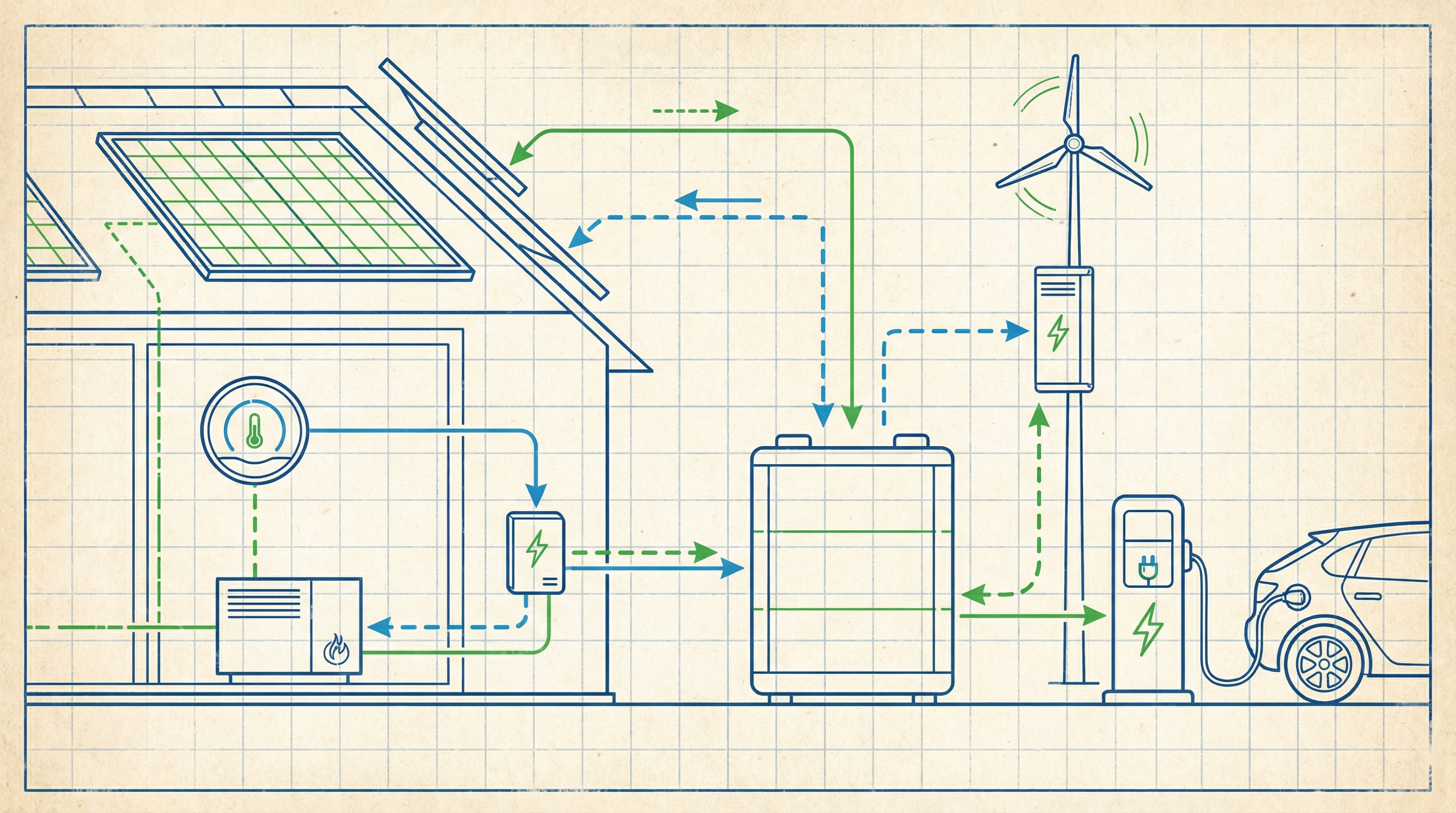
The future of home energy in 2026 represents unprecedented opportunity for homeowners committed to sustainability. The convergence of mature technologies, attractive economics, robust incentives, and environmental urgency has created a compelling case for sustainable energy adoption that continues strengthening.
Every sustainable energy investment contributes to a larger transformation of our energy systems—from centralized fossil fuel dependence toward distributed renewable generation, from passive consumption to active energy citizenship, from environmental degradation to climate restoration. The choices made by individual households aggregate into meaningful collective impact, demonstrating that sustainability at scale begins with individual action.
Whether you approach sustainable home energy from an economic perspective seeking to reduce energy costs, an environmental motivation to minimize your carbon footprint, or a resilience interest in securing reliable power access, the technologies and strategies outlined in this article provide pathways to achieve your goals. The optimal path depends on your specific circumstances, resources, and priorities, but the direction is clear: sustainable home energy represents both an achievable and essential objective for homeowners committed to their future and our planet's.
Take the first step today: Request energy assessments from qualified professionals, research available incentives in your area, and begin planning your sustainable energy journey. The future of home energy belongs to those who prepare for it, and the benefits of early adoption compound over time. Your home, your wallet, and our environment will thank you for the investment.