

How Much Solar Do I Need and Why?
LIWEN HUA
The world is embracing solar energy at an unprecedented rate. Experts predict that we will install 70,000 solar panels every hour over the next five years. Given that Earth receives approximately 3,850 billion terajoules of solar energy annually, this massive adoption comes as no surprise. But the critical question remains: how much solar do you actually need for your home, cabin, or campervan?
Understanding your solar requirements goes beyond simply purchasing panels—it involves calculating your energy consumption, evaluating your location's sunlight availability, and determining the right system size to meet your goals. Whether you want to maximize savings, minimize your carbon footprint, or achieve the best return on investment, this comprehensive guide will walk you through every step of determining your ideal solar setup.
The solar industry has undergone a remarkable transformation since Bell Laboratories invented the first commercial solar cell in 1954. Back then, a single watt of solar capacity cost approximately 1,865 in today's money. Fast forward to 2019, and the average cost per watt in the United States dropped to just $3.05. This represents a price reduction of over 600 times, making solar more accessible than ever before. According to Our World In Data, utility-scale solar systems are now the least expensive energy option to build and operate, surpassing even natural gas and coal in cost-effectiveness.
Why Solar Energy Makes Sense Now
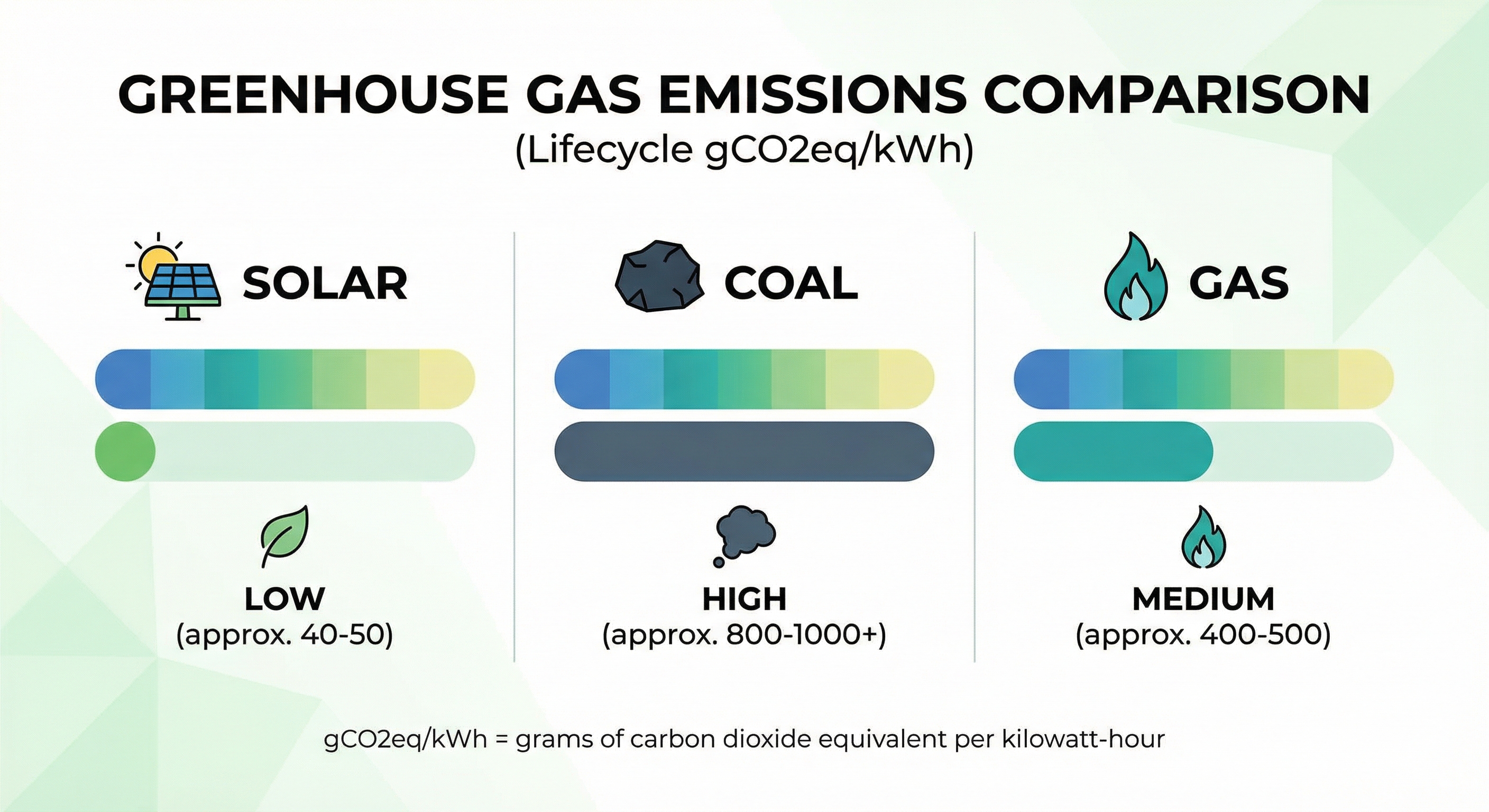
The environmental benefits of solar power extend far beyond reducing your electricity bills. When comparing lifecycle greenhouse gas emissions across different energy sources, solar power demonstrates impressive environmental credentials. Coal emissions reach approximately 820 grams of CO2 equivalent per kilowatt-hour, while natural gas produces around 490 grams. In contrast, solar power generates only 41 grams of CO2 equivalent per kilowatt-hour—up to 95% less than coal-powered electricity. This makes solar one of the cleanest energy options available, comparable to geothermal (38 g/kWh) and hydropower (24 g/kWh), and far superior to fossil fuel-based alternatives.
| Energy Source | Greenhouse Gas Emissions (gCO2eq/kWh) |
|---|---|
| Coal | 820 |
| Gas | 490 |
| Biomass | 230 |
| Solar Power | 41 |
| Geothermal | 38 |
| Hydropower | 24 |
| Wind | 12 |
Beyond environmental considerations, the financial incentives for going solar have never been more compelling. The 26% federal tax credit remains available, allowing homeowners to significantly offset their installation costs. Additionally, solar panels typically last 30 years with minimal maintenance, providing decades of reduced electricity bills and long-term savings. Unlike coal and nuclear energy, whose costs continue to rise, solar installation prices have dramatically decreased while offering predictable, stable energy costs for the lifetime of your system.
How to Calculate Your Solar Needs
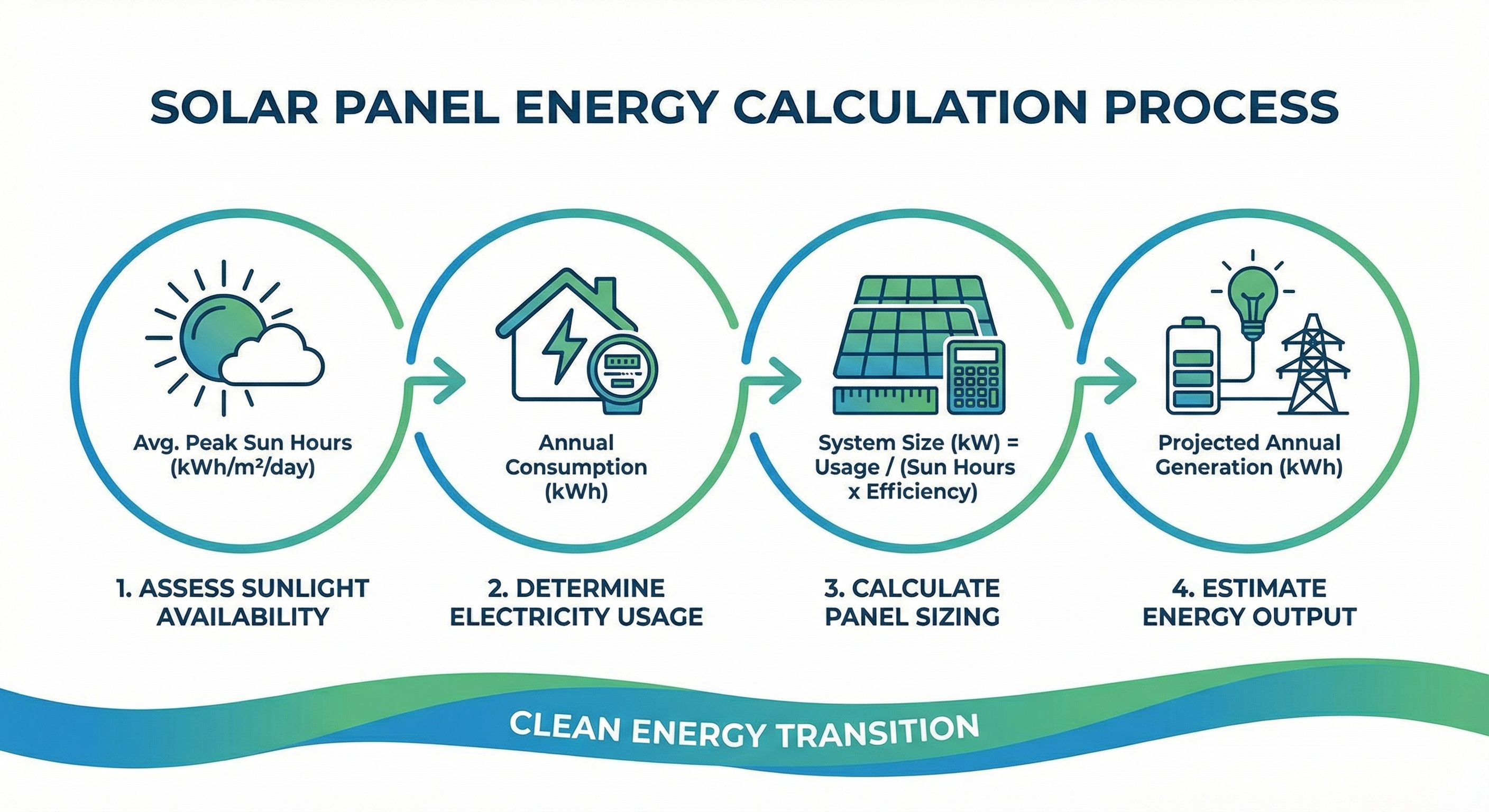
Unfortunately, there is no one-size-fits-all answer to how much solar you will need. Each home, cabin, and campervan has unique energy requirements based on appliances, usage patterns, and location. However, the calculation process follows a logical three-step approach that anyone can follow.
Step 1: Calculate Your Energy Consumption
Before purchasing any solar equipment, you must understand exactly how much electricity you consume. The method varies depending on your living situation:
For Traditional Homes:
Examine your monthly utility bill, which displays your total kilowatt-hour (kWh) consumption. The average American household with two people uses approximately 2,040 kWh monthly, though this varies significantly by region and lifestyle. Simply locate the kWh figure on your bill to establish your baseline energy requirement.
For Cabins, Tiny Homes, and Campervans:
You will need to calculate your consumption manually by examining each appliance. Most devices display their wattage on their labels or in user manuals. Use this formula:
Watts × Hours ÷ 1,000 = kWh
For example, a coffee machine operating at 1425 watts for 2 hours daily consumes: 1425 × 2 ÷ 1,000 = 2.85 kWh per day. Repeat this calculation for every appliance in your space to determine your total monthly consumption. A high-end campervan typically uses around 10 kWh daily or approximately 300 kWh monthly during summer travel conditions.

Step 2: Determine Your Location's Peak Sunlight Hours
Peak sun hours represent the time when sunlight reaches an average of 1,000 watts per square meter—essentially, the period when solar panels operate at maximum efficiency. This differs from total daylight hours because it accounts for solar intensity, not just the presence of sunlight.
Your geographic location dramatically affects available peak sun hours. States like Arizona receive approximately 6.5 daily peak sun hours, while Colorado averages 5.37 hours, and California sees about 5.82 hours. To calculate monthly peak sun hours, multiply your daily average by 30. For instance, Colorado's 5.37 daily hours equals approximately 161 monthly peak sun hours.
For the most accurate assessment, consider using a solar insolation meter, which measures actual solar radiation in your specific location. However, online solar resources and solar calculator tools provide reliable estimates based on historical weather data for most regions.
Step 3: Calculate Your Required Solar System Size
Once you know your monthly energy consumption and available peak sun hours, calculating your required system size becomes straightforward:
Monthly Energy Consumption ÷ Monthly Peak Sun Hours = Required System Size (kW)
Using a practical example: If you consume 500 kWh monthly and live in Colorado (161 monthly peak sun hours), your calculation would be: 500 ÷ 161 = 3.1 kW. This means a 3.1 kilowatt solar system would meet your monthly energy needs.
Remember that this calculation assumes 100% solar coverage. If you wish to remain connected to the grid as a backup, you might install a smaller system. However, for off-grid living, ensure your system accounts for seasonal variations and potential periods of low sunlight.
Solar Requirements by Dwelling Type
Solar Needs for Traditional Homes
The average American home requires substantially more solar capacity than smaller dwellings. Based on typical two-person household consumption of 2,040 kWh monthly, here is how system size varies by location:
| State | Daily Peak Sun Hours | Monthly Peak Sun Hours | Required System Size |
|---|---|---|---|
| Arizona | 6.5 | 195 | 10.4 kW |
| California | 5.82 | 175 | 11.6 kW |
| Colorado | 5.37 | 161 | 12.6 kW |
These figures demonstrate that Arizona homeowners need smaller systems than Colorado residents due to greater sunlight availability. A typical 6 kW residential system serves as an excellent starting point for many households, though your specific requirements may differ based on actual consumption patterns.
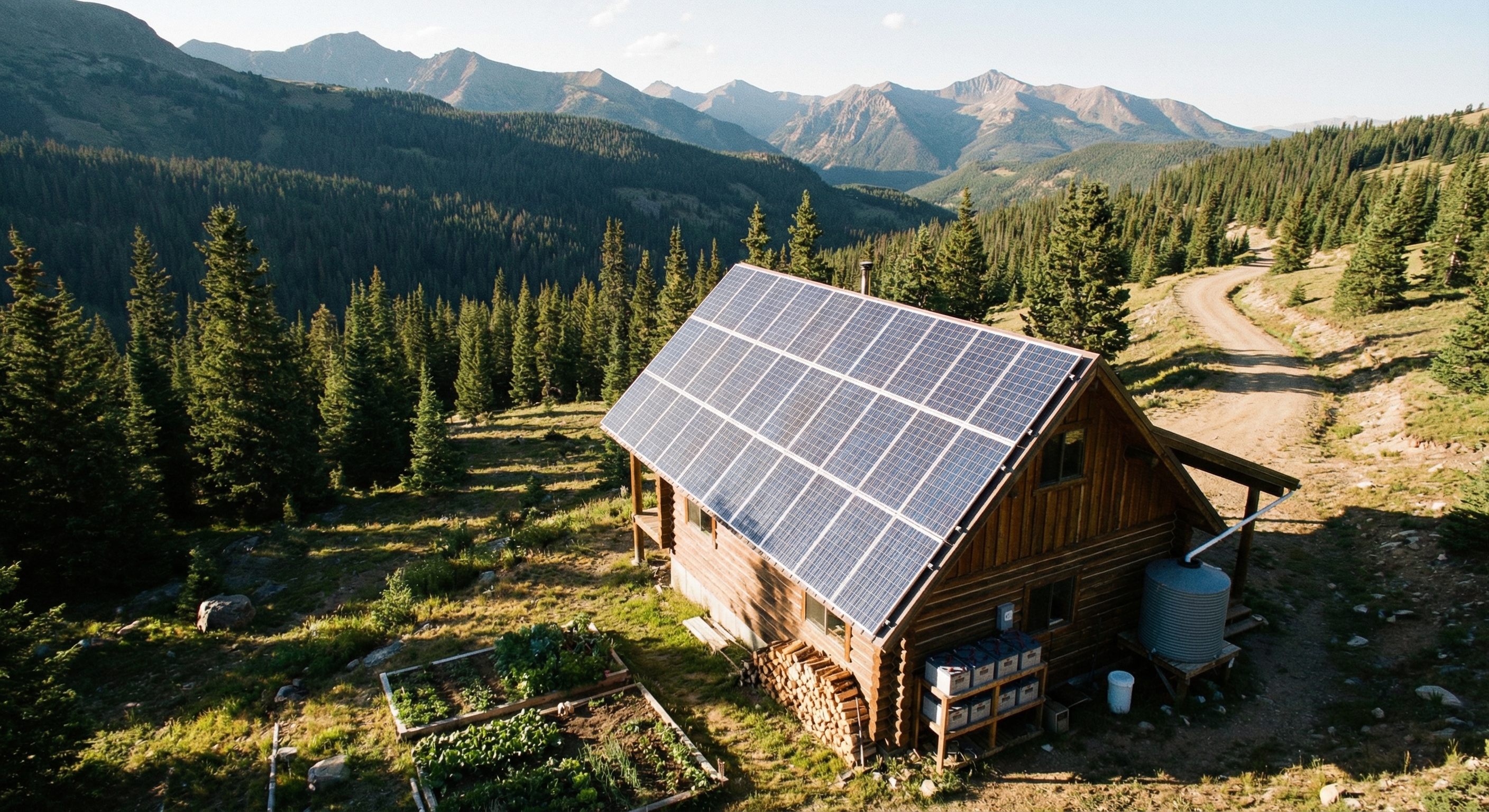
Solar Needs for Cabins and Small Homes
Cabins and tiny homes typically consume significantly less electricity than traditional residences, often lacking multiple high-draw appliances. Assuming average monthly consumption of 800 kWh:
| State | Daily Peak Sun Hours | Monthly Peak Sun Hours | Required System Size |
|---|---|---|---|
| Arizona | 6.5 | 195 | 4.1 kW |
| California | 5.82 | 175 | 4.5 kW |
| Colorado | 5.37 | 161 | 5 kW |
Cabin owners often benefit from smaller, more compact solar installations that can accommodate limited roof space while providing sufficient power for weekend getaways or full-time off-grid living.
Solar Needs for Campervans and RVs
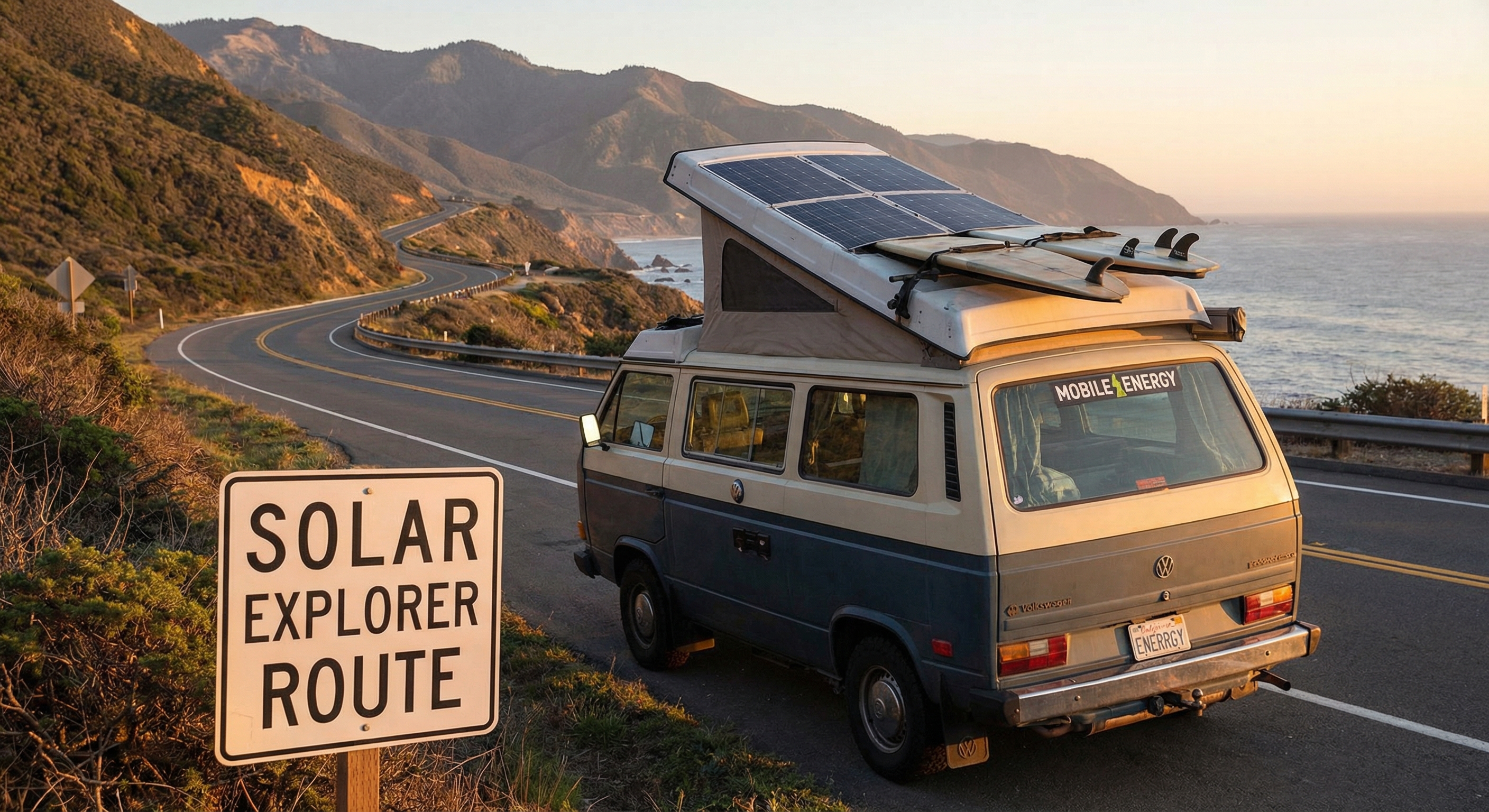
Campervan solar calculations differ due to space constraints and mobility. With average daily consumption of approximately 10 kWh (300 kWh monthly):
| State | Daily Peak Sun Hours | Monthly Peak Sun Hours | Required System Size |
|---|---|---|---|
| Arizona | 6.5 | 195 | 1.5 kW |
| California | 5.82 | 175 | 1.7 kW |
| Colorado | 5.37 | 161 | 1.8 kW |
Here is the practical challenge: installing 1,500 to 1,800 watts of solar panels on a campervan roof presents significant difficulties. A 320-watt panel would require 4-6 panels to meet these requirements—substantial real estate on any vehicle. This is why many campervan owners combine solar with battery storage systems, allowing them to collect energy during the day and use it throughout their travels.
How Much Can Solar Save You?
Solar savings vary dramatically by location due to differences in electricity rates and available sunlight. Below is a comparison of 20-year savings for a 6 kW solar system across major US states:
| State | 6 kW System Cost | Electricity Rate ($/kWh) | 20-Year Savings |
|---|---|---|---|
| Arizona | $11,214 | $0.1226 | $16,866 |
| California | $13,566 | $0.1877 | $49,424 |
| Colorado | $13,314 | $0.1202 | $14,216 |
| Florida | $10,584 | $0.1247 | $17,976 |
| Massachusetts | $13,818 | $0.1936 | $30,523 |
| Maryland | $11,550 | $0.1335 | $19,026 |
| New Jersey | $13,188 | $0.1534 | $19,655 |
| New York | $14,154 | $0.1781 | $26,637 |
| Texas | $12,390 | $0.1140 | $13,720 |
| Washington | $11,802 | $0.0973 | $10,483 |
These figures, sourced from EnergySage data, demonstrate that California homeowners enjoy the highest 20-year savings at nearly $50,000, while Washington residents see more modest returns due to lower electricity rates and less abundant sunshine. However, every state shows positive returns on solar investment, making solar a financially sound decision across the country.

Additional Benefits of Going Solar
Investing in solar energy provides numerous advantages beyond immediate cost savings. The declining prices of solar equipment mean that installation costs have dropped dramatically while system efficiency has improved. Many homeowners discover that their solar investment pays for itself within 7-12 years, after which virtually all subsequent energy production represents pure savings.
Solar installations also provide valuable long-term subsidy benefits through the federal tax credit and various state incentives. Some utility companies offer net metering programs, allowing you to sell excess electricity back to the grid during peak production periods. This creates additional revenue streams while supporting grid stability.
From a retirement planning perspective, installing solar significantly reduces your monthly fixed costs. Rather than facing unpredictable electricity rate increases over the next 30 years, your solar panels provide stable, predictable energy costs that protect your budget from inflation. This financial predictability proves particularly valuable for fixed-income retirees seeking to manage expenses effectively.
Additional reasons why solar is a smart choice include the fact that coal and nuclear energy costs show no signs of dropping, while solar technology continues to improve. Installing a solar system provides long-term benefits that compound over decades of use. By reducing your monthly electricity bill, you effectively save money for your future while contributing to a cleaner environment.

Conclusion
Determining how much solar you need requires careful analysis of your energy consumption, geographic location, and specific goals. By following the calculation steps outlined in this guide—determining your kWh usage, evaluating peak sun hours, and calculating your required system size—you can accurately size your solar installation for maximum efficiency and savings.
Whether you need a 10+ kW system for your family home, a 4-5 kW setup for your cabin, or a compact 1.5-2 kW solution for your campervan, solar energy offers compelling benefits. With potential 20-year savings reaching $50,000 in sunny states, a 30-year panel lifespan, and environmental benefits that reduce your carbon footprint by up to 95% compared to coal, solar represents one of the smartest investments available in the 21st century.
Take control of your energy future today. Calculate your requirements, explore available incentives, and join millions of homeowners who have already made the switch to clean, affordable solar power. Your wallet and the planet will thank you.